FROM CLAIM TO INVESTMENT: THE PERMANENT DWELLING IN THE AMERICAN WEST [2024]
[SOCIETY OF ARCHITECTURAL HISTORIANS 77TH ANNUAL INTERNATIONAL CONFERENCE | DOWNLOAD THE 2024 CONFERENCE PROGRAM HERE.]
I presented this paper as part of the panel, The Long Histories of Land, Value, and Climate Change. The panel chairs were Deepa Ramaswamy (University of Houston) and Dalia Munenzon (University of Houston). The panelists included Elena M'Bouroukounda (Columbia University), Vyta Pivo (University of Michigan), myself, Andrew Herscher (University of Michigan), and Rebecca Yuste (Columbia University).
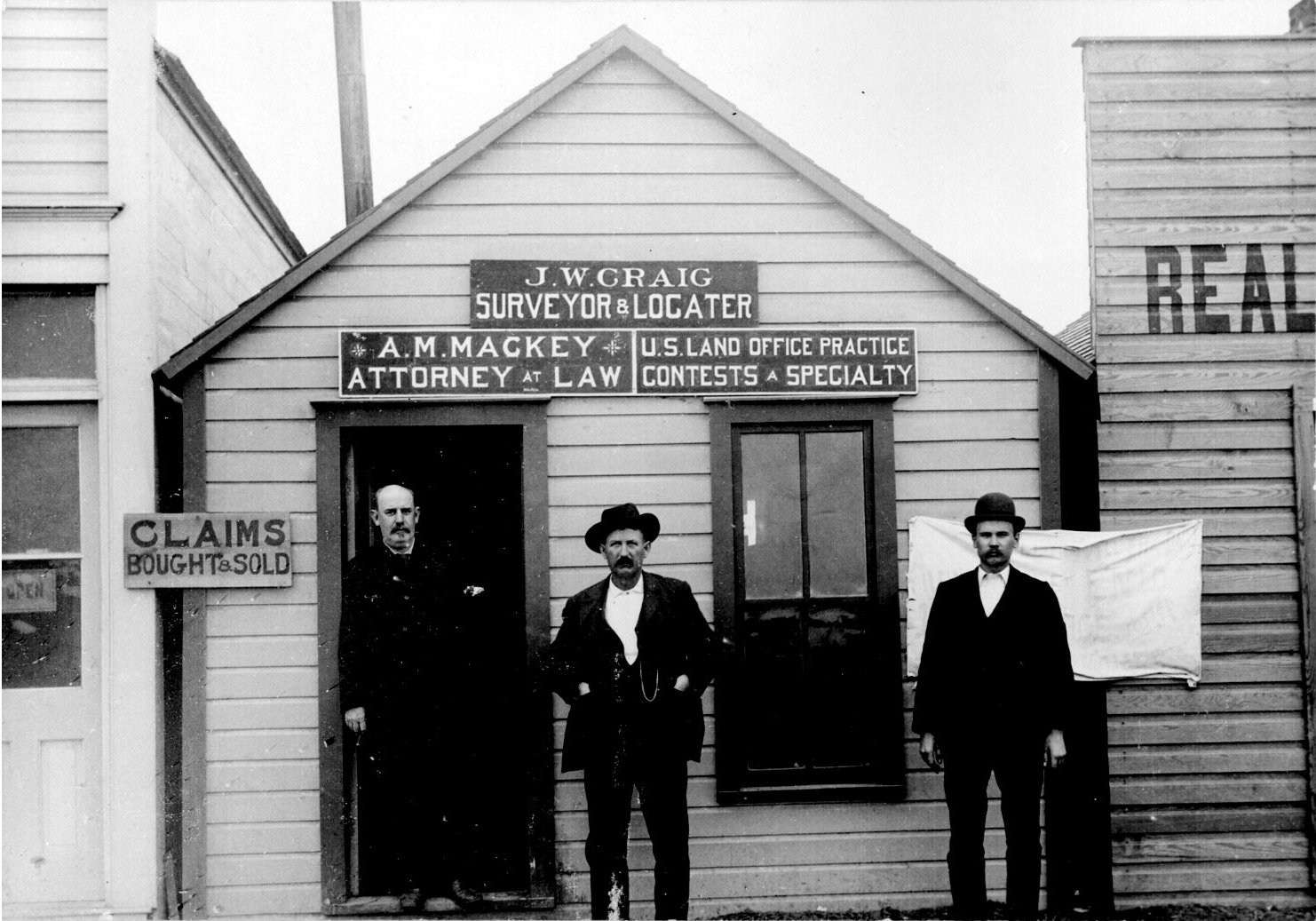
Land Office, Round Pond, Oklahoma, 1894. Photo courtesy National Archives and Records Administration, 233-TRP-42.
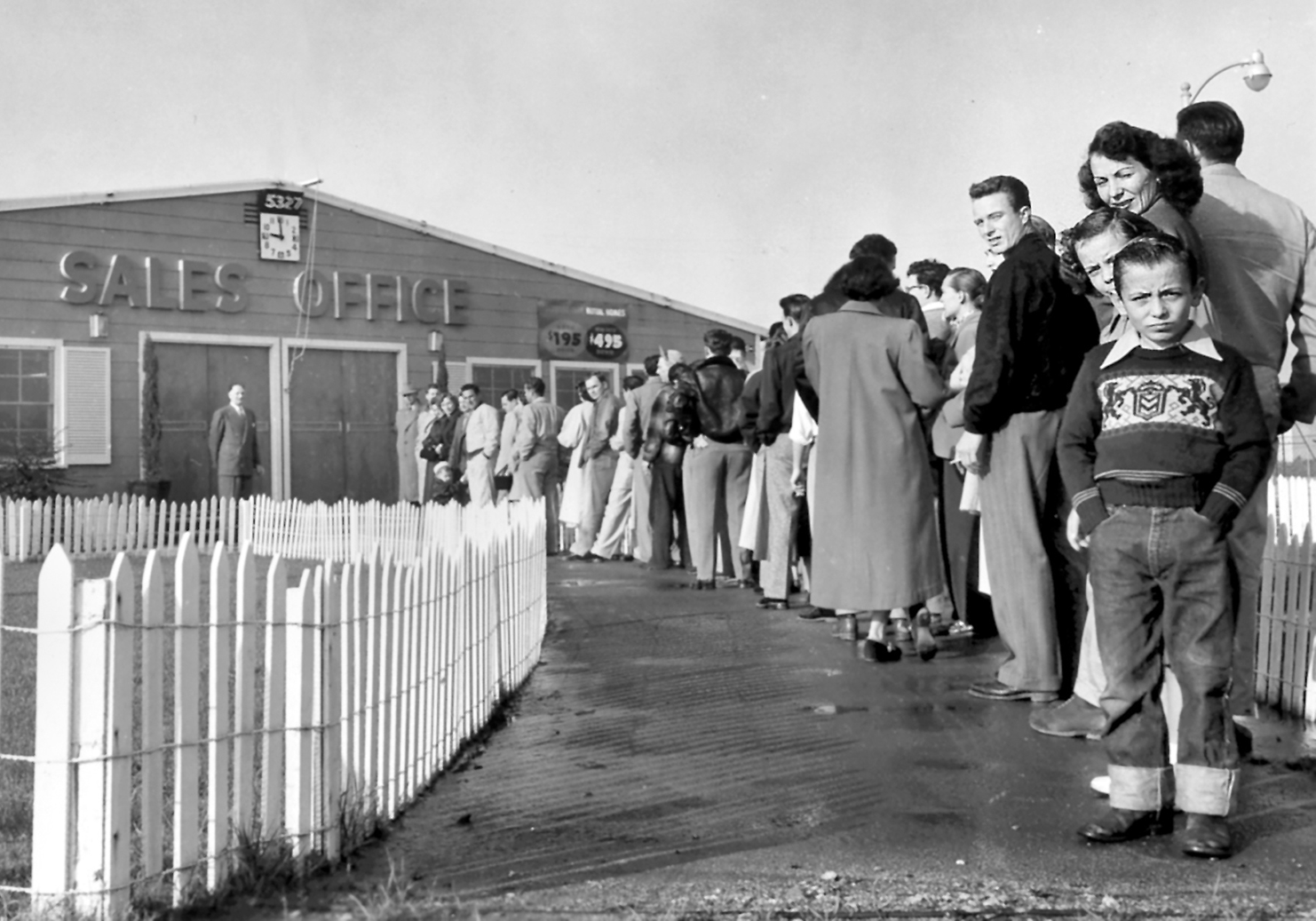
Potential Homeowners, Lakewood, California, 1950. Courtesy City of Lakewood.
PANEL ABSTRACT:
Rob Nixon, a leading scholar in the environmental humanities, has described climate change as a series of “long emergencies” that are instances of “slow violence” that disproportionately affect people with limited resources. This session highlights the need for architectural historians to engage with histories of land exploitation—acts of excavation that accelerated climate change. These histories may emerge from diverse geographies, political circumstances, and social imperatives. These are the histories of displaced populations, deforestation, land reclamation and manipulation, changing land ownership and transience patterns, damaged ecosystems, altered tides and currents, and increased flooding events. These are also the histories of regulations, technologies, and governmental apparatuses that shaped landscapes, infrastructures, industries, materials, and habitats over long periods of time.
What new methods, sources, and frameworks will generate new understandings of vast scales, geographies, and economics of climate change? How can we rethink risk, resilience, and perpetual maintenance? How can scholars destabilize entrenched narratives of immobility value, ownership, and growth? How does climate change relate to colonial and imperial sites of production, extraction, and transaction? What role does land value play in the production of long emergencies? How do we study the histories of resources in relation to failure, negligence, disruption, and collapse? The session chairs welcome researchers at different career stages and from under-represented groups. We encourage papers that cut across geographies, scales, and time.
PAPER ABSTRACT:
This paper investigates residential architecture as it appeared in United States property law, from land grants on once-rural homesteads to mortgage loans on later-urbanized lots. More specifically, it investigates the permanent dwelling as it reflected the federal government’s establishment and manipulation of value, from the Homestead Act of 1862 to the Housing Act of 1934. It argues that the permanent dwelling embodied the United States’ agenda of racialized social control and agricultural land management, first by identifying the claim house as that which activated value in land and then by identifying the single-family home as the only residential architecture worthy of federal investment.
The racialized dispossession of arable land and the bureaucratic management of agricultural labor have long played a critical role in the United States’ economic growth. Much like the Land Ordinance of 1785, the Homestead Act transformed indigenous land into private property, while authorizing the General Land Office to issue title to American settlers and cultivators. It enabled the United States to accelerate the development of the rural West based on perceived rewards of settlement and cultivation. Seventy-two years later, the Housing Act transformed private property into federal investment by creating the Federal Housing Administration to insure mortgages made by private lenders. It enabled the United States to control the development of urban areas based on perceived risks to credit and insurance. On the one hand, this paper examines the General Land Office and the Federal Housing Administration as bureaucratic agents of dispossession and change for their role in the transfer of land from Indigenous peoples, Black Americans, and immigrants to white American homesteaders. On the other hand, it examines the claim house and the single-family home as material embodiments of land dispossession and climate change for their role in the activation of land grants into federal investments.