POWER & PLACE: CULTURE AND CONFLICT IN THE BUILT ENVIRONMENT [2018 + 2019]
[NOTES FROM THE CRITICAL CONSERVATION COLLOQUIA]
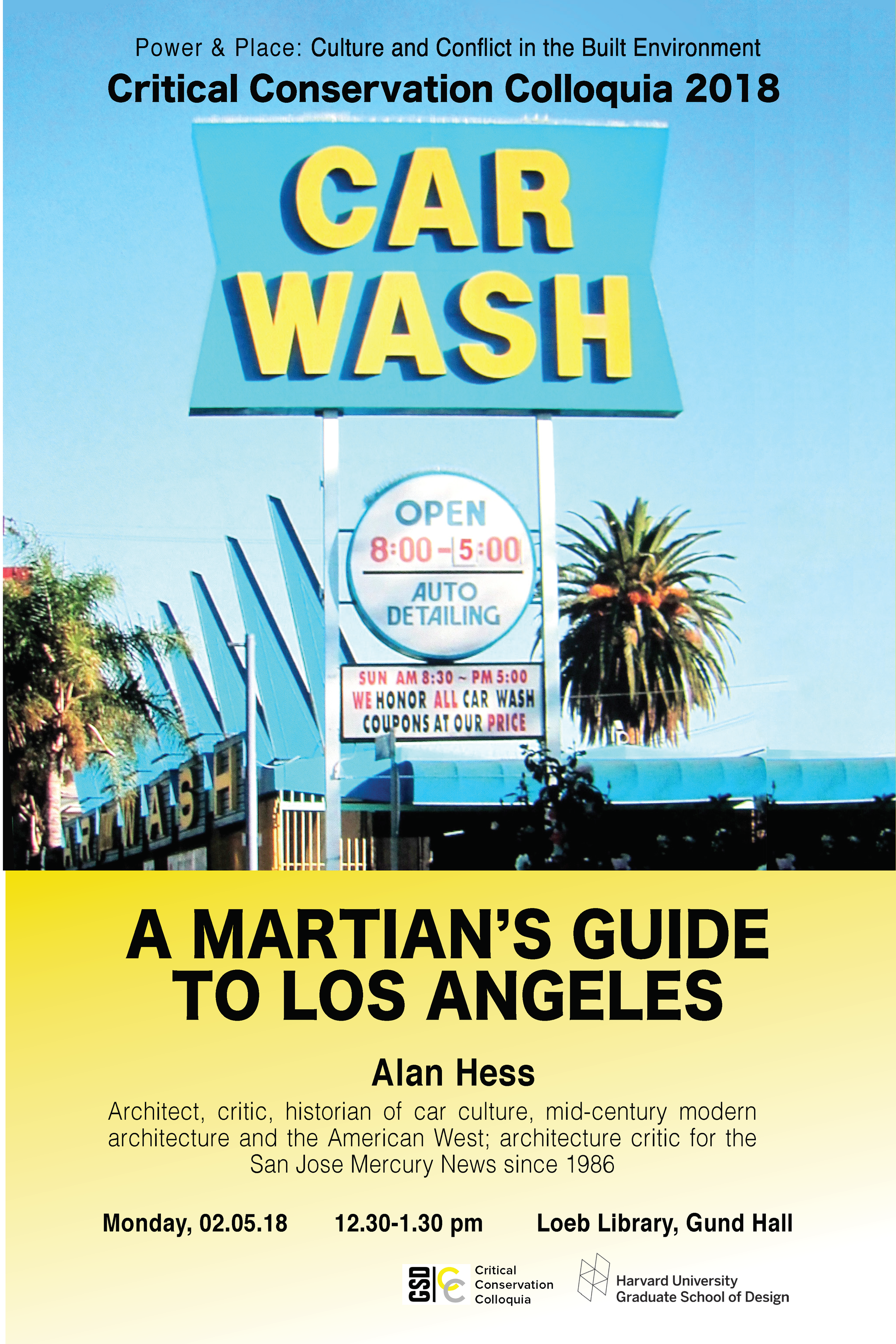
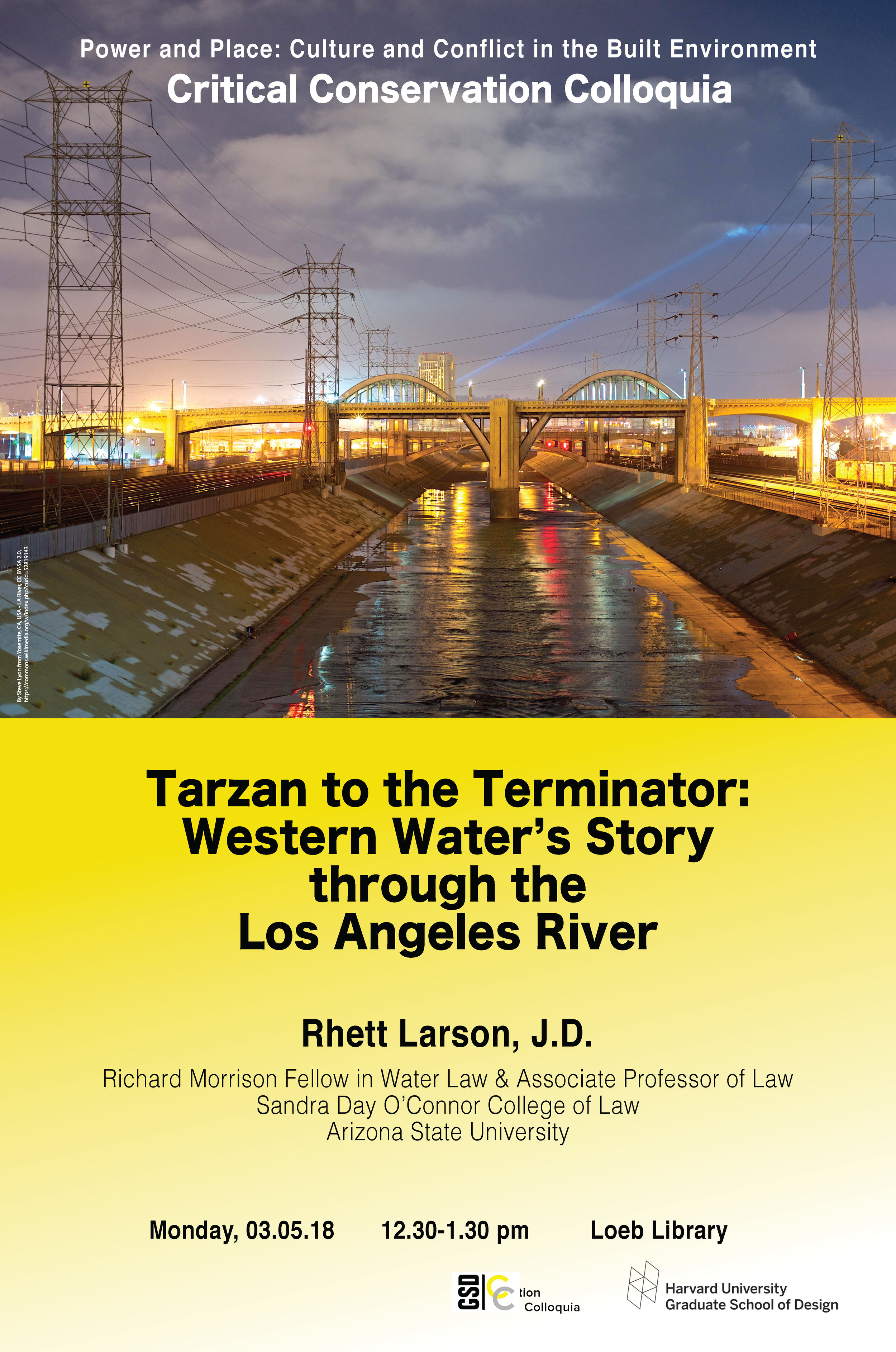
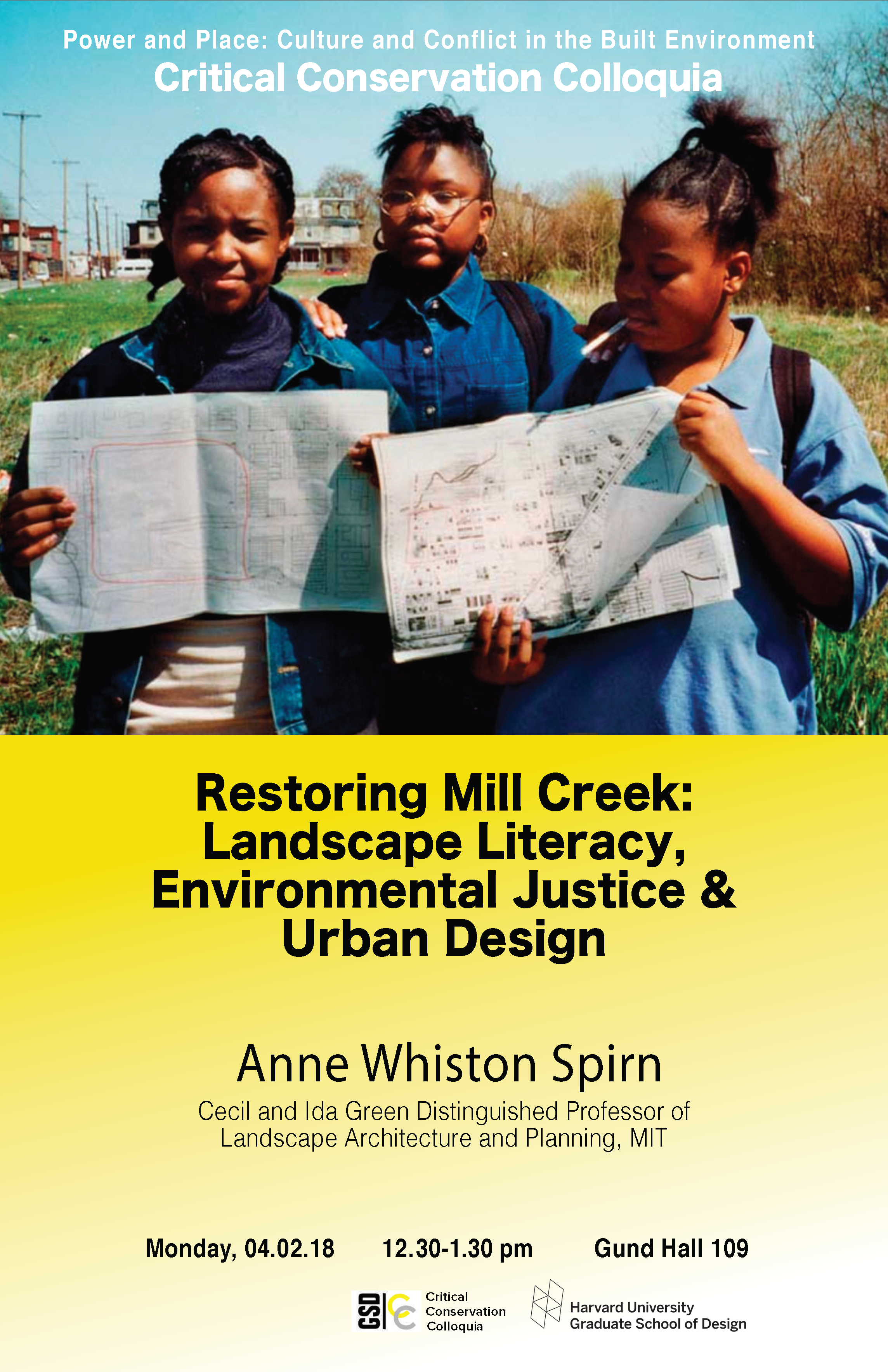
VOLUME 3 [SPRING 2018]
This publication is a record of lectures that were part of the Critical Conservation Colloquia, organized in Spring 2018, by the Master in Design Studies (MDes) program in Critical Conservation at the Harvard University Graduate School of Design. The goals of the course and the accompanying Critical Conservation Colloquia were to foster an understanding of urban ethics and an awareness of the political uses of history and identity.
This course is part of a wider GSD initiative borne out of distress over the rising awareness of discrimination and violence against the African American community that resulted in the fall 2015 Black in Design Conference. At that time, Dean Mostafavi remarked that, “The relationship between race and space, the way in which one could say the racialization of space is becoming more extreme, is continuing. These issues have remained absolutely pertinent.” Critical Conservation is a natural center for this discussion because we focus on places where cultural conflict and the spatial patterns of exclusion such as historic districts and red-lining have suppressed racial, ethnic, economic and religious differences, leaving an indelible imprint on the material character of the city. The array of ideas and scholars presented here exemplifies the broader investigation that Professors Susan Nigra Snyder and George E. Thomas are leading through the Critical Conservation research agenda.
The lecture/workshop course 04479: Power & Place: Culture and Conflict in the Built Environment was taught by Professors Snyder and Thomas focusing on the central theme of the proposed transformation of the Los Angeles River from its present form as a concrete drainage channel, created to reduce flooding in the city, to a “naturalesque” recreation that becomes a visual and physical amenity that could very well drive gentrification while it brings new parks to underserved neighborhoods. Four neighborhoods that border on the river were the focus of student research: the core downtown with its bordering ethnic neighborhoods, transforming arts district in the industrial edge along the river, and homeless community; Boyle Heights, formerly a Irish and later Jewish neighborhood, now a center of the Hispanic community dotted with public and Hope Six housing projects, all rapidly gentrifying with design offices and art galleries; South Los Angeles, with areas of extreme residential density with meager access to parks, large manufacturing buildings and industrial districts organized to exclude residents, and the San Fernando Valley, where the Los Angeles River begins. This last research area is largely a suburban district that includes Studio City, the home of the major television studios, but is bound to the city by the need to access water, while longing to leave the city because of the city’s urban problems. The goal was to foster an awareness and discussion about processes and expressions of power in urban form and design in the built North American environment. In the semi-arid environment of Los Angeles, access to water gathered from distant inland sources as far as the Rocky Mountains, is the binding agent that has made the city. But as we learned from Marc Reisner’s Cadillac Desert: The American West and Its Disappearing Water, “the West’s cardinal law: that water flows toward power and money.” In Los Angeles water is power.
The MDes program in Critical Conservation has been formed to shape a broader conversation about design and development that engages 21st century questions of environmental, social and economic sustainability to serve an ever more pluralist and global society. Critical Conservation provides designers with a methodological foundation to research the cultural systems that frame conflicts inherent in making progressive places—the cultural ecology of place. It provides a theoretical understanding of the social construction of dynamic cultural meaning associated with places, artifacts and history. The knowledge gained provides an understanding that planning involving the uses of history and group identity—critical to place-making—demands that urban ethics be considered as part of the design process. By exposing underlying forces associated with development in a growing urban world, the objective is to unearth the contested, paradoxical and sometimes exclusionary nature of development across scales, from individual to institutions, and site to state.
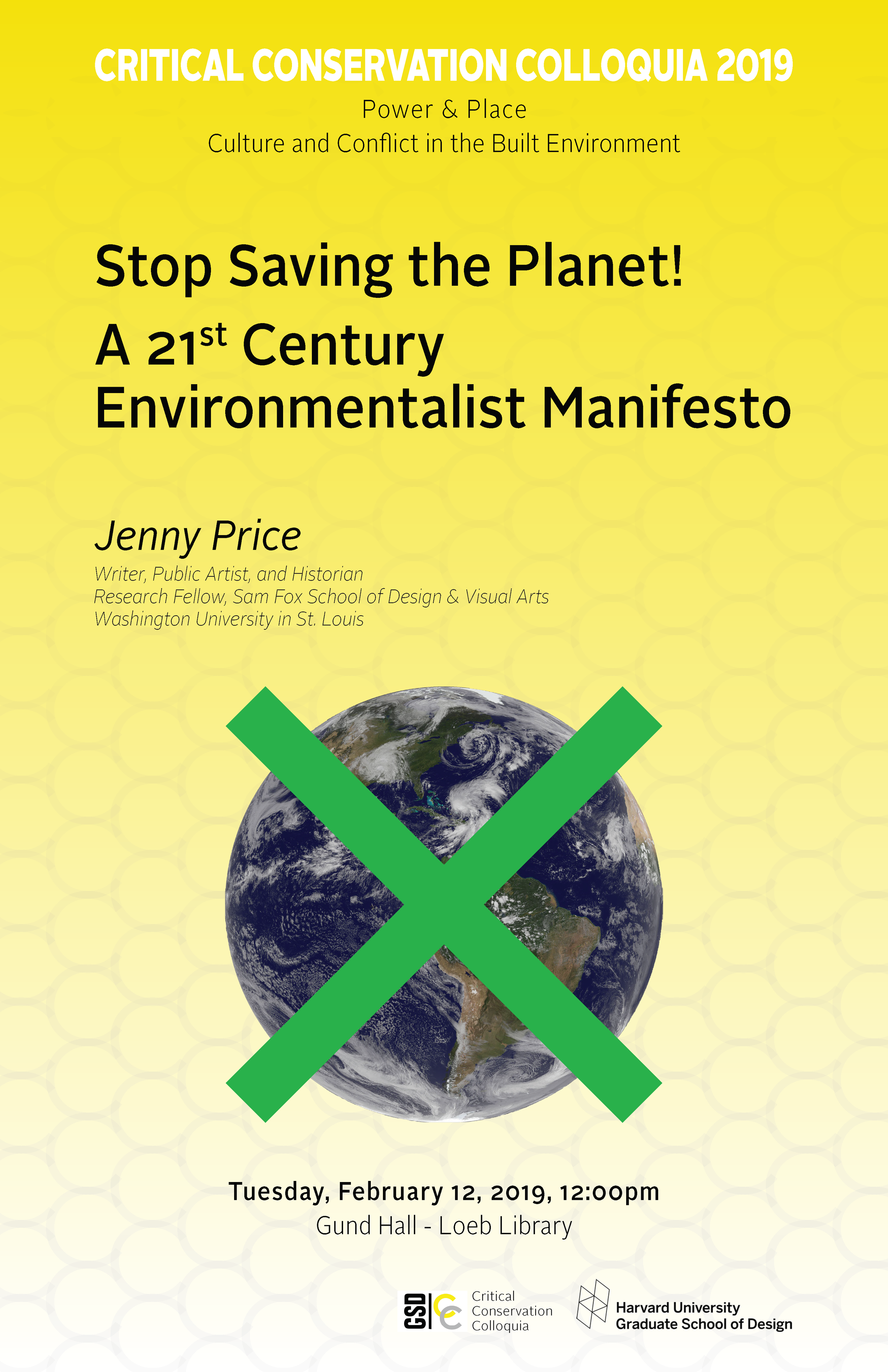
[NOTES FROM THE CRITICAL CONSERVATION COLLOQUIA 4]
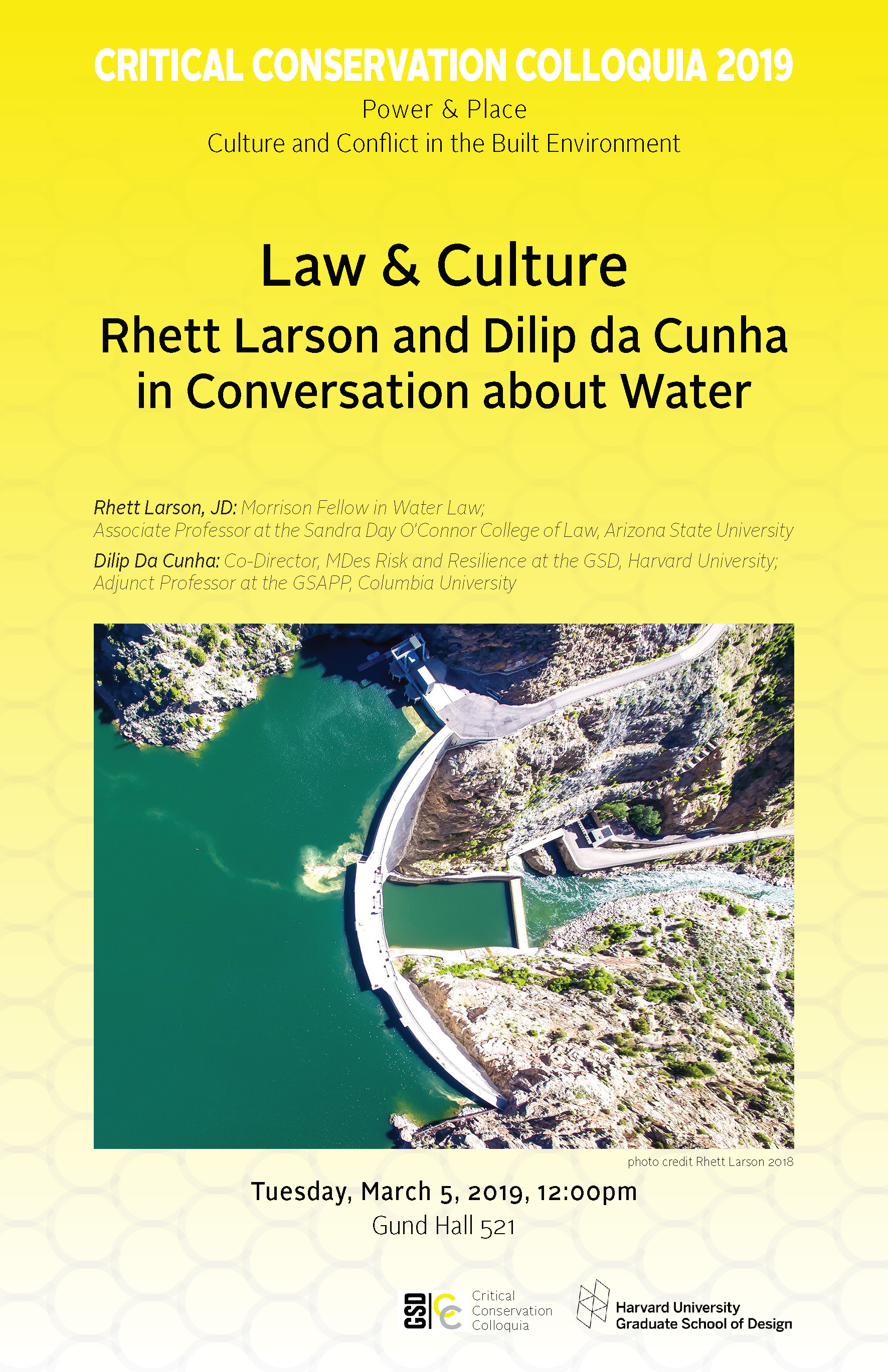
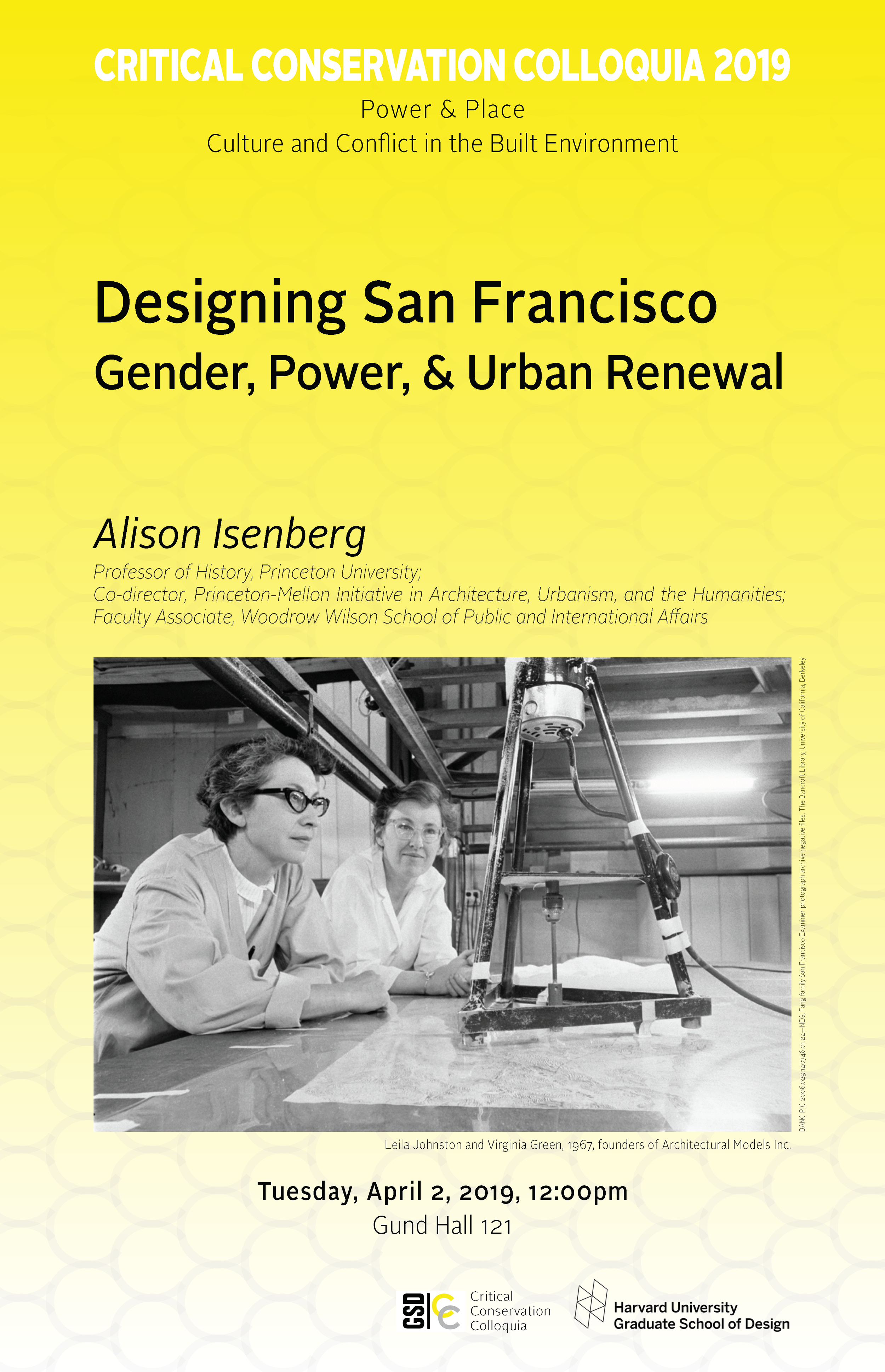
This publication is a record of lectures that were part of the Critical Conservation Colloquia, organized in Spring 2019 by the Master in Design Studies (MDes) program in Critical Conservation at the Harvard University Graduate School of Design to accompany the course, “Power & Place: Culture & Conflict in the Built Environment.” The goals of the course and the accompanying Critical Conservation Colloquia are to foster an understanding of urban ethics and an awareness of the political uses of history and identity. This course began as part of a wider GSD initiative borne out of distress over the rising awareness of discrimination and violence against the African American community that resulted in the fall 2015 Black in Design Conference. At that time, Dean Mostafavi remarked that, “The relationship between race and space, the way in which one could say the racialization of space is becoming more extreme, is continuing. These issues have remained absolutely pertinent.” Critical Conservation is a natural center for this discussion because we focus on places where cultural conflict and the spatial patterns of exclusion such as historic districts and red-lining have suppressed racial, ethnic, economic and religious differences, leaving an indelible imprint on the material character of the city. The array of ideas and scholars presented here exemplifies the broader investigation that co-directors Susan Nigra Snyder and George E. Thomas are leading through the Critical Conservation research agenda.
This is the fourth year of the series that accompanies the class, “Power & Place.” This class studies places where cultural conflict has emerged from both intended and unintended regulatory and spatial patterns of exclusion. 2019 has continued to focus on three areas of Los Angeles:
The Harbor: The Port of Los Angeles in San Pedro Bay is 20 miles south of downtown and handles 20% of all cargo coming into the United States. The mix of heavy industry, oil fields, trucking industry and port activities from one of the busiest container ports in the world has produced conflicts between conservation, community protection and market forces creating a situation of environmental discrimination for a working-class, low-education level population and increasing gentrification reflecting their locations near the Pacific Ocean.
The “Denas:” The “Dena” communities (Pasadena, Altadena, La Cañada-Flintridge) at the base of the San Gabriel Mountains are independent of the City of Los Angeles, but part of LA County. They are connected to downtown LA by the Arroyo Seco Parkway that borders the Los Angeles River’s Arroyo Seco tributary—a source of flood waters for all communities downstream of the Devils Gate Dam. All three communities are affected by the restoration of the Devil’s Gate Dam reservoir—creating a conflict over dredging to maintain flood protection for the entire city versus protecting the habitat—now a park / open space—that has resulted from years of sediment deposits. The project estimates 400 trucks per day moving through the communities for sediment removal. These neighborhoods, once the site of racial covenant segregation are now the site of intense environmental conflict.
The Western San Gabriel Valley: The San Gabriel Valley is noted for its rapid Asianification since 1980 with many communities now having a majority-Asian population where recently they had a dominant white hegemony. Known as the “real Chinatown” of Los Angeles, wealthy immigrants now settle here first in an ethnic enclave creating the rise of a majority-Asian suburb even as historic regulations require “Mediterranean” styling that gives priority to European cultural frames.
The MDes program in Critical Conservation has been formed to shape a broader conversation about design and development that engages 21st century questions of environmental, social and economic sustainability to serve an ever more pluralist and global society. Critical Conservation explores how history and constructed narratives of heritage are used as instruments of power to control the identity of places and the subsequent inclusion and exclusion of populations these acts enable. The program makes clear that truly critical conservation is about social justice instead of being about buildings or places. Critical Conservation provides designers with a methodological foundation to research the cultural systems that frame conflicts inherent in making progressive places—the cultural ecology of place. It provides a theoretical understanding of the social construction of dynamic cultural meaning associated with places, artifacts and history. The knowledge gained provides an understanding that decisions critical to place-making involving the uses of history and group identity demand that an ethical perspective be part of the design process.